
Nova Clean
Careful cleaning for heavily cluttered properties
An agreed plan for sorting, clearance and detailed cleaning, with clear decisions about the belongings you want to keep.
Hoarding cleaning · Greater London
Hoarding cleaning in London with a clear plan for belongings, clearance and the condition of your property

Arranging hoarding cleaning in London often starts with a practical difficulty: the rooms cannot be used as intended, there are too many belongings to work around, or a property needs attention before its next stage of occupation. You may be the person living there, a relative helping with permission, a landlord or a professional managing the premises. NOVA CLEAN London discusses the actual work required without assuming how the situation developed. The purpose of the enquiry is to establish what needs sorting, what may be removed and which accessible surfaces need detailed cleaning.
A heavily cluttered property does not have one standard cleaning specification. Some homes contain a large quantity of possessions but little substantial soiling; others need a combination of clearance, surface cleaning and separate specialist assessment. The first useful step is to describe the condition accurately and identify who can authorise decisions. Contact us on 0845 52 805 20 or email
A cleaning plan that respects the person and the belongings in the home
Possessions can have personal, financial or practical importance that is not apparent to someone entering the property for the first time. A box near the door may contain correspondence, photographs or documents needed later; an item that looks replaceable may have a particular meaning to its owner. A workable plan identifies those priorities before removal begins. Explain which rooms, cupboards or collections need an individual decision, whether another authorised person should be present and how items awaiting a decision will be separated from material approved for removal.
The cleaning enquiry should remain focused on the property and the work. It does not require the person requesting help to defend their circumstances or disclose unrelated personal information. A cleaning intervention is a practical service, with an agreed beginning and end; it should not be presented as a diagnosis or as a replacement for other support. Where several people are involved, one nominated contact can coordinate instructions and avoid contradictory decisions. The person responsible for the contents should have the opportunity to explain what must be preserved and which choices remain outstanding.
Distinguishing decluttering, house clearance and detailed cleaning before you request a quotation
These activities overlap, but they use different amounts of time and lead to different outcomes. Decluttering involves reviewing possessions and deciding how the remaining space will be used. House clearance removes material that an authorised person has approved for removal. Detailed cleaning addresses the condition of accessible surfaces once the agreed space has been made available. A quotation should state which of these activities it includes, rather than use a single description that leaves the client expecting several services for the price of one.
If you have already completed the sorting and can identify everything to be removed, explain that at the first enquiry. If decisions are still needed in every room, the time allowed should reflect that. Equally, a request to remove a number of bags or pieces of furniture does not automatically include cleaning the kitchen, bathroom, cupboards and floors. Our house clearance and decluttering service can be discussed as a related scope, while a property that is already clear may be better suited to house and flat deep cleaning.
Assessing the extent of accumulation rather than quoting from the number of bedrooms
A description such as a two-bedroom flat gives only a starting point. The quantity of belongings, the usable access route and the condition beneath the contents can be more relevant to the work than the nominal room count. Photographs taken from doorways help show the overall layout, while selected closer views can indicate the condition of worktops, sanitary fittings and flooring. Include storage rooms, corridors and other areas within the proposed job, and explain whether photographs leave out any part of the premises that could materially change the assessment.
The same apparent volume can require different arrangements in a ground-floor house and an upper-floor flat. Furniture size, lift access, narrow turns, shared entrances and the distance to a permitted loading area all affect the plan. Tell us whether water and electricity are available and whether the property remains occupied. Where the information supplied cannot support a reliable specification, the next step may be an assessment visit. A photograph-based estimate should explain its assumptions, and any work discovered later should be discussed before a revised scope is accepted.
Agreeing a room-by-room sequence and a method for decisions about contents
A practical sequence establishes where the work will begin, which spaces need to become usable first and how retained belongings will be protected during the intervention. Priorities might include a kitchen, bathroom, circulation area or a particular room needed by the occupant. The sequence should reflect the assessment and the client's objectives rather than an automatic promise to empty every room at once. Where the property contains items that need checking individually, the plan should allow a realistic decision process instead of assuming those decisions can be made immediately.
Before work starts, agree how the team will distinguish retained items, material approved for removal and anything that needs further instructions. Specify a suitable place for papers or valuables found during sorting, and establish who can answer questions on the day. If items are to go elsewhere, confirm that arrangement rather than assuming donation, storage or transport is included. Changes of mind are easier to manage while belongings remain on the property and the responsible person is available. The quotation and instructions should therefore define clear approval points for removal.
Cleaning kitchens, bathrooms and living areas once the agreed space is accessible
After the agreed clearance stage, the cleaning specification can address the surfaces that have become accessible. In a kitchen this may include worktops, cupboard fronts, reachable wall finishes, sinks and the agreed parts of appliances. In a bathroom it may include sanitary fittings, taps, reachable tiled surfaces and the floor. Living rooms and bedrooms can require work on skirting boards, doors, accessible furniture surfaces and the flooring. Internal cupboards, appliance interiors and windows should be identified individually when they form part of the request.
The aim is to match the work to the material and the type of soiling. A sealed hard floor, a textile covering, painted joinery and a delicate decorative finish do not share one cleaning method. Existing wear, staining, damaged coatings and areas hidden behind fixed fittings can limit the result. The assessment should distinguish removable deposits from damage that may need repair or replacement. Photographs and a description of known problems help define that distinction, but the final specification may depend on what becomes visible after the contents have been dealt with.
Making separate decisions about floor coverings, furnishings and persistent odours
Cleaning a room does not automatically mean every furnishing or floor covering can be retained. Some items may be suitable for a separate treatment; others may be damaged, unsuitable for the proposed method or outside the agreed job. Tell us what you want assessed and whether preserving a particular item is a priority. The condition, material and intended use matter more than an assumption that a particular machine will restore everything. Where carpet treatment is appropriate, it can be specified separately through the carpet cleaning service.
Odour work also needs a defined scope. An enquiry should describe where the smell is most noticeable, whether it varies between rooms and what has already been removed or cleaned. Cleaning accessible surfaces may form part of the response, but a persistent source can require further investigation or another trade. The quotation should explain what is being addressed and any limits on the expected result. Avoid treating a fragrance, a particular product or the name of a machine as proof that a concealed problem has been resolved. The handover should record any areas that still need attention.
Identifying specialist requirements and exclusions before the intervention is booked
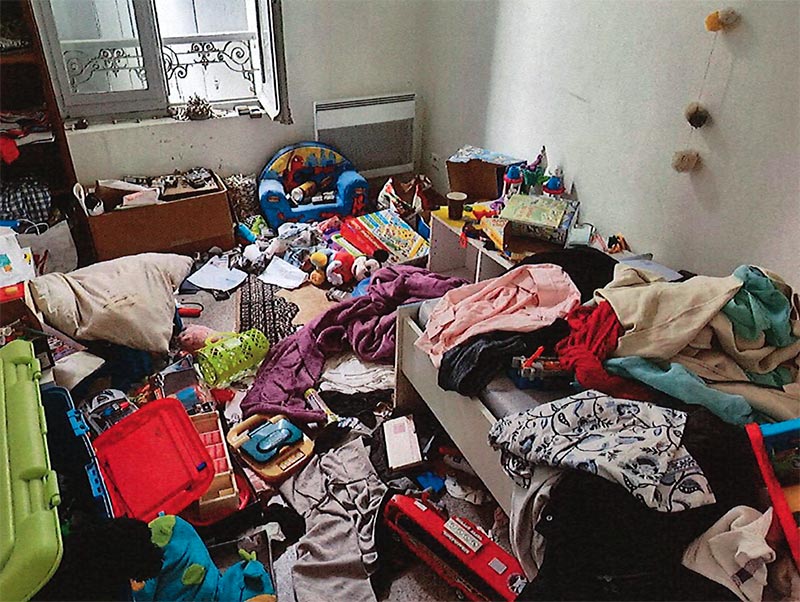
Some properties present issues that need assessment beyond an ordinary clearance and deep clean. Tell us about known building damage, suspected contamination, pest activity, difficult access or any restrictions imposed by the building manager. Mention these conditions in the enquiry so the proposed work can be assessed by the appropriate professional. A general quotation should not imply that it includes structural repairs, electrical work, pest control or the removal of every kind of material. Those activities need to be identified and confirmed separately.
If the situation follows a death, a fire or flooding, explain that at the outset rather than describing it only as a cluttered property. Related services include after death cleaning, fire and smoke damage cleaning and flood and water damage cleaning. These are separate types of work whose scope depends on the circumstances. An initial conversation can establish which assessment is relevant without asking you to decide on a technical treatment yourself.
Organising hoarding cleaning in London flats, houses and managed buildings
London properties often introduce constraints that are easy to overlook when focusing on the contents alone. A mansion block may have a booking process for lifts; a converted house may share a narrow stairway; a high-street property may have limited loading access. Provide the floor level, the available route and any restrictions on working times. If the building manager needs an agreed method or access arrangements, raise that before a date is proposed. Occupied neighbouring premises and shared circulation areas should form part of the planning discussion.
We discuss enquiries across London and Greater London, including Westminster, Camden, Islington, Hackney, Tower Hamlets, Southwark, Lambeth, Greenwich, Wandsworth, Ealing and Croydon. The postcode helps establish location, but does not determine the price on its own. Access, quantity, condition and the agreed result remain the important details. Tell us if a relative, landlord, letting agent or other representative will provide entry, and confirm who is responsible for the instructions. Projects outside Greater London should be discussed separately before travel or availability is assumed.
The information behind a useful hoarding cleaning quotation and realistic budget
A reliable quotation makes the work understandable. It should identify the rooms, the sorting or clearance included, the surfaces to be cleaned, any separately agreed treatment and the practical requirements for access. Price depends on the amount of material to review or remove, the condition of the premises, the labour time, the access arrangements and the work needed after clearance. A room-by-room list is more useful than a general description such as a complete clean when different people may interpret that phrase differently.
Ask whether removal arrangements are included, how retained belongings will be handled and whether further visits form part of the proposal. Clarify the treatment of any applicable taxes and additional costs in the written quotation. If the job depends on information supplied from photographs, check which assumptions could change the scope. We do not publish a single fixed price for every hoarded property because the quantities and conditions differ substantially. The next step is a specific assessment and an agreed quotation, rather than an unsupported price promise based on the number of rooms.
Reviewing the completed work and planning the next use of the property
At handover, the completed work should be reviewed against the agreed specification. Check the rooms included, the treatment of retained belongings and any limitations recorded during the intervention. If repairs, further investigation or another specialist service are recommended, those items should be distinguished from the cleaning already completed. Before-and-after photographs can support a practical record where agreed, but private circumstances and photographs should not be treated as material for publicity. Explain any requirements for the handover record during the quotation stage.
The next step may be continued occupation, decoration, repairs, a tenancy handover or decisions about future use. Each objective can require a different level of clearance and cleaning. A property intended for renovation may need access for trades, while an occupied home may need particular rooms made usable without removing all possessions. Discuss that intended outcome from the beginning. It helps establish a proportionate intervention and prevents unnecessary work being added simply because a room contains a large quantity of belongings.
Questions that often arise before arranging hoarding cleaning in Greater London
Can a relative or property manager make the initial enquiry?
Yes. Explain your role, who can authorise access and who is responsible for decisions about the contents. An enquiry can establish the likely assessment process, but permissions and instructions need to be clear before work or removal is arranged.
Does everything need to be thrown away?
No automatic decision should be made about all the contents. The scope should distinguish belongings to retain, material approved for removal and items awaiting instructions. Describe any collections, papers or possessions that need particular attention.
Can you quote from photographs?
Photographs and a detailed description can support an initial assessment. A visit may be needed if the quantity, access or condition cannot be established reliably. The written quotation should explain the information and assumptions on which it is based.
Is hoarding cleaning the same as a regular domestic clean?
The proposed work can involve sorting, clearance and substantial cleaning in a sequence that a routine visit does not cover. Ask for each activity to be listed. Once a property is clear, a separate maintenance arrangement can be considered according to the person's needs.
Discuss a practical plan for your London property
Send the postcode, photographs where appropriate and a description of the rooms and contents involved. We will discuss access, decision-making and the cleaning you need before confirming the proposed scope and availability.
Request a cleaning quote0845 52 805 20Practical questions about hoarding cleaning
Can a hoarding clean be organised in stages?
Yes, a staged scope can be discussed where access, decisions about belongings or continued occupation make a single clearance unsuitable. Agree the rooms or routes to address first, the person who approves removals and what each stage will include. A staged plan should also distinguish cleaning from longer-term support for the person living in the home.
Find out more about Nova Clean and its work since 2015. For related requirements, see House Clearance London, After death cleaning in London, House Deep Cleaning London.